
Share Judson Drake Hale Sr.'s obituary with others.
Invite friends and family to read the obituary and add memories.
Stay updated
We'll notify you when service details or new memories are added.
You're now following this obituary
We'll email you when there are updates.
Select your format and elements to print

IN LOVING MEMORY OF Judson Drake Hale Sr.
Judson Drake
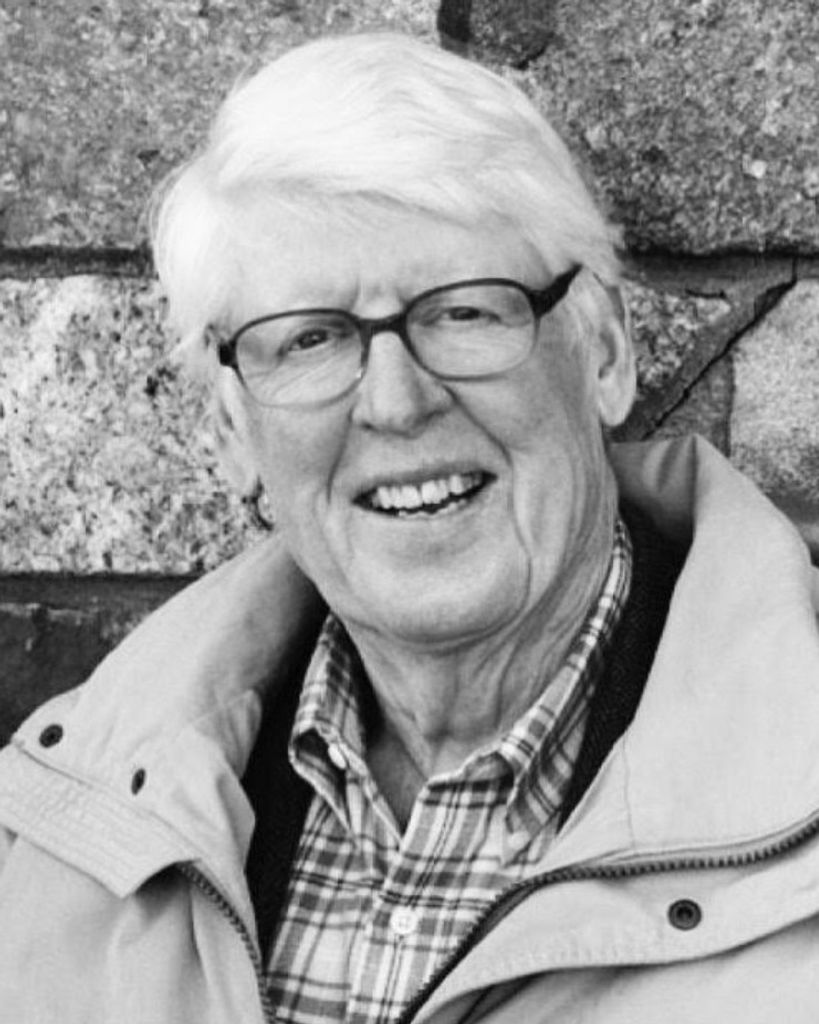
Hale Sr.
Mar 16, 1933 — Aug 28, 2026
Funeral Services for Judson Drake Hale Sr.
Celebration of Life

Friday
Peterborough Town House
Starts at 2:00 pm (Eastern time)
Judson Drake Hale Sr.'s Obituary
Judson Drake Hale Sr.—husband, dad, grandfather, great-grandfather, uncle, editor, writer, boater, colleague, volunteer, and veteran—was a man who celebrated family, life, and work with equal passion. He loved a good laugh, was a gifted storyteller both in person and written, and spent his remarkable career helping tell the story of New England.
Jud was a New Englander to his core. He believed deeply in the people, places, history, and traditions of the region, but he also understood that New England’s story was never finished. Through his work at Yankee magazine and The Old Farmer’s Almanac, through his own writing, and through his community involvement, he spent his life preserving, interpreting, and celebrating the place he loved.
Born March 16, 1933, in Boston, Massachusetts, Jud was the youngest of three children of Marian and Roger Judson Hale. His mother was an opera singer and teacher. His father would soon purchase a lumber business and farm in Vanceboro, Maine, on the border with New Brunswick, Canada.
His older sister, Patricia Hale Whitcomb, became a professional photographer and raised a beautiful family on a working farm in the Northeast Kingdom of Vermont, including a sugaring operation in winter and early spring. His older brother, Drake Roger Hale, had what came to be known as a severe case of autism and was living in Arlesheim, Switzerland, attending the first Waldorf school for children and adults. Drake’s life and the circumstances surrounding his time in Switzerland would profoundly affect the Hale family, both before and after World War II.
Jud moved to Vanceboro and attended the Waldorf-inspired grade school his mother had started. By third grade, he was off to boarding school in Connecticut called The Edgewood School with his sister, Patsy. He moved on to High Mowing in Wilton, New Hampshire, for the first year of its existence in 1942, and back to Vanceboro for a few years in that local public school, and The Choate School, where he graduated in ‘51, and Dartmouth College, Class of ‘55.
College provided Jud with both an education and, as he would later acknowledge, one of the most important turning points of his life. He was asked to leave Dartmouth shortly before graduation in 1955, a tragic event at the time but one he came to embrace as an important chapter in the story of his life—and one that would ultimately become part of his most successful book, The Education of a Yankee, published by HarperCollins in 1987.
That unexpected time away from college also gave Jud the opportunity to travel to Europe with his mother and, for the first time, meet his older brother Drake. Until then, the war and circumstances surrounding Drake’s life in Switzerland had kept the brothers apart.
Soon after, Jud was drafted into the U.S. Army in 1955. He became a tank commander and was stationed in Germany in the years following the Korean War. Jud was enormously proud of his military service and of the friendships and responsibilities in the 3rd Armored Division 33rd Tank Battalion “Spearheads” Company B. In addition, and perhaps tied to his upbringing in Maine, he was rated as a marksman.
That pride never left him. For many years, he marched in Dublin’s Memorial Day parade, alongside veterans of the World Wars and later generations of veterans from Korea, Vietnam, and the Gulf War.
One of his cherished memories was what came afterward: a cold can of beer in the basement of Dublin Town Hall with the other veterans.
In 1958, Jud joined Yankee Publishing Inc. as an assistant editor. He became associate editor, then managing editor, and in 1970 was named editor of Yankee magazine and The Old Farmer’s Almanac. A very big responsibility for a young man. He was only the second editor of Yankee since 1935 and the 12th editor of The Old Farmer’s Almanac, whose history dates to 1792. His vision, skills, and personality grew Yankee and The Old Farmer’s Almanac to new levels of success and size - with several national magazine awards. He hired, developed, managed, and nurtured talent that formed an incredible team of editors and colleagues that punched much above their weight even nationally.
In 2000, he became Editor-in-Chief of both publications and chairman of the board of directors.
Jud worked at Yankee for 62 years, from 1958 until 2019. But “worked” hardly describes what Yankee meant to him. It was his profession, his passion and, in many ways, his way of life.
He edited hundreds of columns, stories and articles over the years and wrote a column for more than four decades known to Yankee readers as “House for Sale”, and, with only a few exceptions, was the “Yankee Mosier.” In it, Jud sought out interesting houses for sale, but the homes were only part of the story. He wanted to know the history behind them and, even more importantly, the stories of the people who lived in them.
One of those assignments took him to Sleepers Island on Lake Winnipesaukee in 1970. Jud photographed and wrote about a cottage on the island. On the way home, his son, who happened to be there with Sally, asked which issue of Yankee would feature the story.
“October or November,” Jud replied, “unless I buy it myself!”
He did.
And for the next 42 years, that cottage—and island life on Lake Winnipesaukee—became one of the great loves of his life.
Jud also carried on an important tradition established by his uncle, Robb Sagendorph, the longtime publisher/editor of The Old Farmer’s Almanac. Each year, particularly around the release of the Almanac’s fall edition with its pending winter forecast, Jud traveled the country giving speeches and appearing on radio, television, and in newspapers.
Like Robb, he had the timing, wit and humor to keep his listeners slightly off balance—and laughing.
He appeared on The Today Show, Good Morning America, Late Night with Conan O’Brien and many other national programs. He particularly loved appearing on Today, where he had known Al Roker back when Roker was doing television in Cleveland.
Over the years, Jud was interviewed by Katie Couric, Joan Lunden, Larry King, Charlie Gibson, Harry Smith, Tom Brokaw, Willard Scott, David Hartman and Jane Pauley, among many others.
His longtime editor, Mel Allen, captured Jud perhaps better than anyone in writing about him. Mel wrote that Jud was “New England to the core” and that he had filled Yankee with who he was and what he cared about.
Through the magazine, Mel wrote, Jud “made this region come alive for readers across the country,” allowing people who had never even visited New England to feel that they belonged there.
That was Jud’s gift.
He understood that the best stories were not simply about places. They were about people. They could be humorous, dramatic, surprising, tragic, or wonderfully ordinary. But they had to matter. Through those stories, Jud helped generations of readers feel connected to New England and to one another.
Jud always thought of himself first as an editor. He used to explain that this was one reason writing his own books was so difficult: he was an editor before he was a writer —and he was his own toughest editor.
He authored Inside New England (Harper & Row, 1982), The Education of a Yankee (HarperCollins, 1987), and Discovering Our Faraway Brother (PublishAmerica, 2007). He also wrote for national publications including American Heritage, National Geographic Traveler, and Reader’s Digest, and edited hundreds of articles and books during his career.
But perhaps the most important story Jud wrote was the life he built with his wife, Sally.
Jud and Sally Huberlie Hale were college sweethearts and were married for nearly 69 years. They met in college and maintained a long letter-writing relationship during Jud’s military service and subsequent hospitalization for tuberculosis. They were married in September 1958 in the backyard of Sally’s parents’ home in Webster, New York.
A letter Jud wrote to his Uncle Robb—his mother’s brother, whom he barely knew at the time—eventually led to a job offer and brought Jud and Sally to New Hampshire. That opportunity helped launch the career that would define much of Jud’s life.
Together, Jud and Sally raised three sons, all born in Peterborough, NH: Judson Drake Hale Jr. (J.D.); Daniel Larker Hale; and Christopher Roger Hale. They were blessed with three wonderful daughters-in-law, Cindy Speros Hale, Carolyn Joy Hale, and Catherine Ann Briggs-Hale, and eight grandchildren: Charlie, Rosie, Lacey, Austin, Drew, Julia, Olivia and Spencer.
And then came four great-grandchildren: Colette, Iris, Ryder and Theo.
Family was at the center of Jud’s life.
For 42 years, the family gathered at “Liberty Street,” the Hale home on Sleepers Island in West Alton, New Hampshire, on Lake Winnipesaukee. The lake was Jud’s retreat, his writing place, his playground, and his sanctuary.
He would rise early each morning and write until noon.
He also loved boating. In 1978, he purchased his dream boat, “One Egg,” from John O’Connell at Northeast Marina in Wolfeboro—a day the family is convinced should be ranked somewhere alongside the births of J.D., Dan and Chris.
The Hale A-frame on the island hosted countless friends and family members over the years. It was also, at times, a spectacularly weather-exposed location, sitting directly in the path of storms traveling down the lake’s 13-mile stretch of open water.
Over the years, the docks and moorings lost more than a few boats to the weather. But after three decades or so, Jud and Sally had learned what to do—and what not to do.
They tied everything down “six ways to Sunday.”
And in the final 10 or 15 years at Liberty Street, not even a lunch sandwich was lost to the weather.
Jud was also famous for his barbecue chicken—and for his summer habit of reducing the frequency of wiping his face as the meal progressed. The family knew that the less he wiped, the more delicious the meal must have been.
Despite his “silver spoon” upbringing in Boston and Chestnut Hill, it was his childhood and early life in the wilds of Maine that made Jud comfortable with virtually every kind of New Englander—and, really, with people everywhere.
He never seemed to meet a stranger.
And he never seemed to lose his curiosity about people.
Jud also loved his hometown of Dublin, New Hampshire, and the Monadnock region. His commitment to the community extended well beyond his work at Yankee.
He served as president of the Monadnock Community Hospital Board of Trustees and was particularly proud to have been part of the team that brought an emergency entrance and capabilities to the hospital.
He was a co-founder of Inherit New Hampshire, an organization dedicated to preserving the state’s historic places and traditions, now known as the New Hampshire Preservation Alliance.
His community involvement took many forms. He served on the board of the MacDowell Colony, the Sharon Arts Center, and the Dartmouth Club of Southwest New Hampshire, where he was named “President of the Year” in 1977. He also served as Civil Defense Director for Dublin.
And he was a volunteer firefighter with the Dublin Fire Department for more than 17 years.
His proximity to the Dublin firehouse made his volunteer firefighting career particularly memorable. Yankee’s office was next door to the firehouse, which meant Jud could be in the middle of an office meeting one minute and running toward a fire call the next.
The first person to arrive was supposed to start the main engine and warm it up.
Jud was always worried that if he started the engine, he might actually have to drive the truck.
So, as the story goes, Jud would run around the first fire truck in his suit and tie, again and again, waiting for someone competent, like Brian Barden, to arrive and take over the job.
It was classic Jud: true, funny, and told with maybe a slight bit of mischievous embellishment to make the story even better.
Jud’s contributions to New England and to the communities he cared about were recognized throughout his life. He was listed in Who’s Who in America and received the Choate School Alumni Seal Prize in 1986. He was awarded honorary doctorate degrees by New England College, Franklin Pierce University, and Keene State College.
But Jud was never particularly interested in titles or honors for their own sake. What mattered to him was being useful—helping an institution he believed in, preserving something worth preserving, or simply showing up when his community needed him.
In the final chapter of Inside New England, published in 1982, Jud wrote a passage that became one of his favorite pieces of his own writing. It was, in many ways, a prediction of where his mind would be as his life came to a close.
He imagined himself older, sitting on the shore of Lake Winnipesaukee on a calm, warm June morning, drinking coffee beneath the pines and watching the wind move across the lake.
He wrote:
“At a certain time when I’m as old or older than that Springfield gentleman, I know where I’ll be, wherever I am. It will be very early on a calm, warm late-June morning on New Hampshire’s Lake Winnipesaukee. I will walk down to the water’s edge below my camp on Sleepers Island, rest on the bench I built there years before, and sip from a mug of hot coffee.”
He went on to imagine the sun glistening through the tall pines, a distant outboard motor, the lake lying quiet before him, and the familiar summertime wind slowly making its way down the water.
He imagined looking across the lake to the hills and then beyond, toward the misty blue mountains to the north.
It is difficult to imagine a more fitting picture of Jud.
For 42 years, he had his island.
For 62 years, he had Yankee.
For nearly 69 years, he had Sally.
And for all of those years, he had his family, his friends, his colleagues, his stories, his boats, his New England, and his remarkable curiosity about the world around him.
Jud Hale lived a big life—but he never seemed to think of it that way.
He was simply Jud (with one “D”!).
He leaves Sally, his three sons and their families, eight grandchildren and four great-grandchildren, along with countless friends and colleagues whose lives were made richer, funnier, and more interesting because Jud was in them.
Jud knew exactly where he wanted to be.
And, in so many ways, he got there.
In lieu of flowers, thank you for your generosity towards three non-profit organizations - NH Public Radio, Monadnock United Way, and The Dublin NH Food Pantry (1283 Main Street, Unit 3, Dublin, NH 03444) in his name, Jud Hale Sr.
Celebration of Life for Jud Hale Sr is Friday, November 6th at 2 pm at the Peterborough Town House. Burial is private.

Judson Drake Hale Sr.'s Guestbook
Visits: 1582
This site is protected by reCAPTCHA and the
Google Privacy Policy and Terms of Service apply.
Service map data © OpenStreetMap contributors